Σελίδες

Showing posts with label Pacific Ocean. Show all posts

Friday, August 7, 2015

Vancouver, British Columbia

Vancouver, British Columbia most recently ranked by The Economist as the number one “most livable city in the world”. Vancouver is a picturesque city surrounded by the waters of the Pacific Ocean and the snow capped peaks of the Coast Mountain range. Every bit as cosmopolitan as Seattle, with a distinctive European flair, Vancouver is the Canadian jewel of Puget Sound. The city is rapidly expanding, yet still maintains its serene beauty and desirable lifestyle.
Vancouver is Canada’s third largest city with many unique neighborhoods to explore including Gastown, Yaletown, Chinatown and the West End. Located 26 miles northwest of the United States border, Vancouver is considered a major Pacific Coast seaport while being the foremost commercial, financial, tourist and cultural center of British Columbia.
Archaeological evidence shows that the Coast Salish people had settled the Vancouver area by 500 BC. In the 1870s, Vancouver was founded as a sawmill settlement called Granville. In 1858, gold was discovered on the Fraser River. It triggered a massive invasion of more than 25,000 Americans with high hopes and forced the governor to declare the area a British Colony. In 1886, the city was incorporated and renamed Vancouver after Captain George Vancouver, a British naval captain who explored the area in 1792.
Today, Vancouver is one of Canada’s most important cities and one of the world’s major economic centers. More than two million people currently live in the Greater Vancouver area. With a reputation as one of the most livable cities in the world, it’s no coincidence that the city’s population grows steadily. Vancouver is a community proud of its past with a keen eye toward a future rich with promise.
Vancouver is home to Canada’s largest Chinatown, which was designated a Provincial Heritage in 1971 and is the location for many exotic shops, restaurants and the Chinese Cultural Center. Chinatown features Dr.Sun Yat-Sen Chinese Garden, which is the only authentic classical Chinese Garden outside of China. 

Monday, May 4, 2015

Puerto Montt, Chile


The original settlement of Puerto Montt was named for the Chilean President at that time, Manuel Montt and dates back to 1853, when Vicente Perez Rosales and a group of  German immigrants decided to colonize the densely forested region around Lake Llanquihue. When train service arrived in the early 20th Century, the city really took off and became a popular stop for travelers between Magallanes and Chiloé. The city was ruined, and then rebuilt after the 1960 earthquake. Not surprisingly, given its nautical setting, Puerto Montt has recently grown into a major fishing and fish industry port known for its salmon. 


Wednesday, April 29, 2015

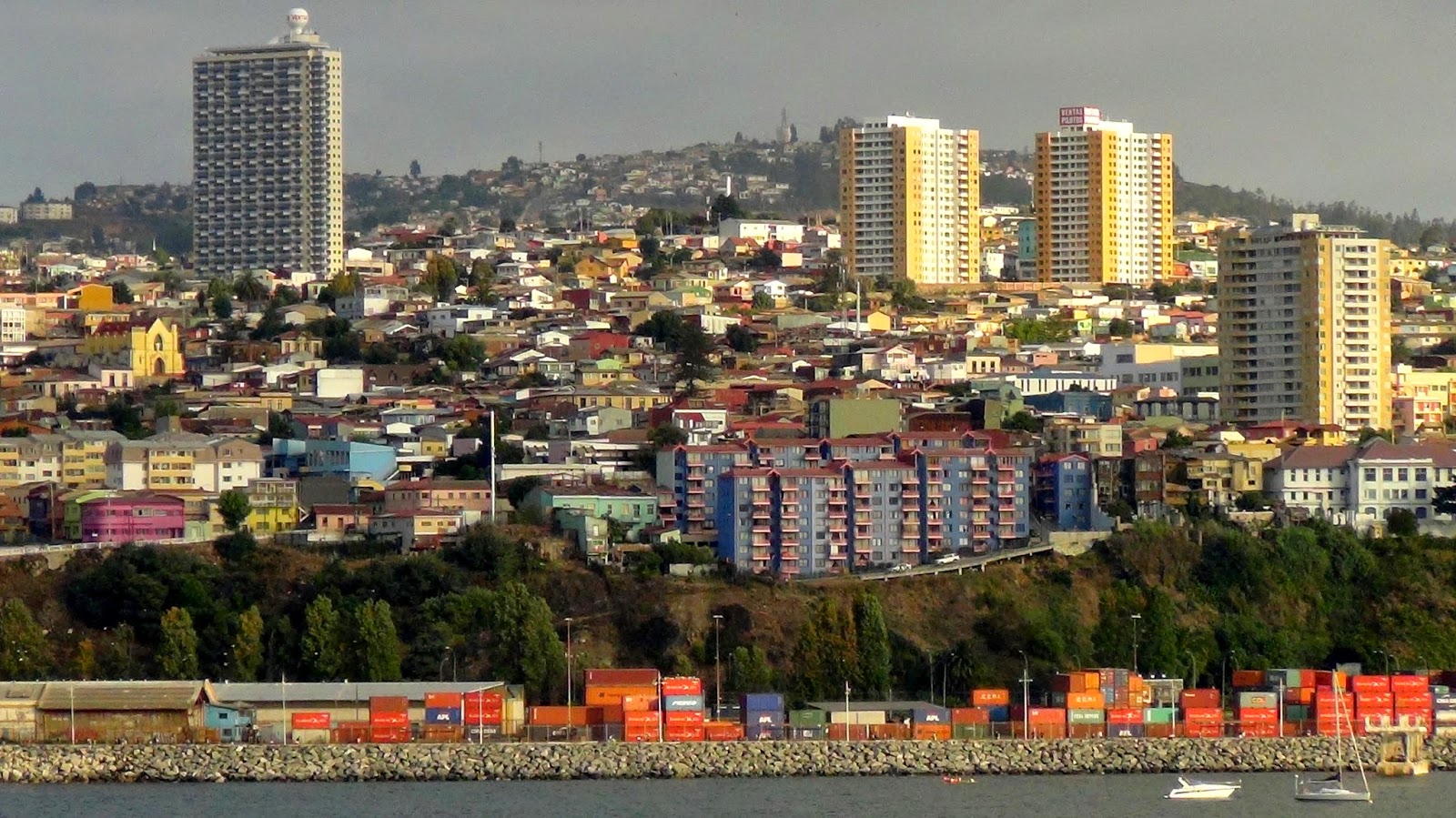
Valparaiso, Chile


Situated about 120km (72 miles) northwest of Santiago, Valparaiso is the second biggest city in Chile and the Capital of the Region.
In 2003 Valparaiso was declared a World Heritage Site, due to its historical importance, natural beauty, original architecture and layout.
You will find many funiculars, known as 'ascensores' throughout Valparaíso. These are a way for local people to be taken to and from their homes high up in the picturesque hillside neighborhoods. Some of the 'ascensores' where built as early as 1883. These are a must do when you visit the city as you will get to see some amazing views from them as you go up.
Muelle Prat (Prat Wharf) can be found at the foot of the Plaza Sotomayor, the main square of Valparaíso. Muelle Prat is the only wharf where the public can closely watch the loading and unloading of the ships from a safe distance (if that's your type of thing). You will find a typical handicrafts market at this wharf and boat trips around the harbor can also be taken from here.

Wednesday, April 1, 2015

Arica, Chile

Arica is in the Northern Chile. It is a seaside resort town (170,000 pop): quiet, relaxed, safe, with several nice beaches and sun virtually every day of the year. The city of eternal spring is the northern gateway to Peru and Bolivia.
Arica spreads out at the foot of El Morro Hill, the site of a major battle of the Peruvian War (1879-83). Today, the hill is a national historic monument, complete with an open-air museum. The summit of El Morro affords excellent panoramic views, which survey the city, the ocean, and even the distant Atacama. Among adventure travelers, the city is best known as the starting point for excursions into the Atacama Desert. 

The Museo Arqueologicò San Miguel de Azapa, located a short distance out of town, gives an excellent introduction to the history of the area. Among its most fascinating exhibits are a collection of Incan mummies, whose bodies were perfectly preserved in the extraordinarily arid sands of the forbidding Atacama.
Also of interest in Arica is the San Marcos de Arica church, designed by the famed tower-builder Gustav Eiffel. 


Monday, March 23, 2015

Lima, Peru


Lima is the capital of Peru and its largest city.
The modern city is a curious mix of the modern mega city with some 'islands of modernity', large but orderly slum areas and colonial architecture in the city center.
Metropolitan Lima is a metropolis of almost 8.5 million people. Many of these people have migrated from the Andes mountains to find work in Lima, without success. For this reason, there is widespread poverty in the city center and in the peripheral areas. If you fly into Lima, the first thing you see upon leaving the airport is these types of poor neighborhoods between the airport and Lima's historic center.
Lima is built upon a valley surrounded by an extremely arid desert. In the summer, the weather is usually beautiful, very warm and sunny, sometimes with rains around January. In the winter, the city is overcast and rainy for days at a time. The rain in the wintertime doesn't fall hard, but it gets everything wet. Temperature also falls to around 7-12 C (45-55 F), which seems chillier when combined with the general dampness.


Monday, March 16, 2015

Salaverry (Trujillo), Peru


The Peruvian port of Salaverry leads the way to Trujillo, the nation’s second-largest city,  situated before the Andean foothills. Salaverry is located 15 kilometers (9.3 miles), approximately 30 minute-drive southeast of Trujillo city.

Trujillo is a city of rich colonial architecture and very important archaeological center of the pre-Inca era. Today much of its colonial charm is still retained in its old churches, balconied homes and courtyards with overhanging flowering baskets. Like most Peruvian cities, the Plaza de Armas is surrounded by the cathedral and city hall. Numerous colonial mansions have been preserved in the old city and are open to visitors. The fronts of many of these buildings have distinctive wrought-iron grillwork and are painted in pastel colors.

Marinera is a coastal dance of Peru. Marinera is a graceful and romantic couple's dance that uses handkerchiefs as props. The dance is an elegant and stylized reenactment of a courtship, and it shows a blend of the different cultures of Peru. The dance itself has gained a lot of recognition and is one of the most popular traditional dances of Peru. Ever since the 1960s, during the month of January, in the city of Trujillo, declared national capital of this dance by law N° 24.447, January 24, in 1986 and a National Contest of Marinera Nortena is held. In 2012, the Congress of the Peruvian Republic declared October 7 as Marinera Day in Trujillo City, which is celebrated with a parade and dance expressions.

Monday, March 9, 2015

Cartagena, Colombia


Cartagena, also known as Cartagena de Indias (Cartagena of the West Indies) was founded in 1533 by Don Pedro de Heredia, and named after the port of Cartagena in Spain’s Murcia region. It was a major center of early Spanish settlement in the Americas and continues to be an economic hub as well as a popular tourist destination. Today the city looks more like a modern metropolis than one of the oldest cities of the New World. The Port, Fortresses and Monuments of Cartagena have been on UNESCO’s World Heritage List since 1984.
History is present throughout the city in its walls, colonial architecture, and in numerous impressive military and religious monuments. These all come together harmoniously with clear-water beaches, exotic nearby islands, and lively bars, cafés, restaurants and night clubs. Surrounded by a ring of massive fortress walls built by the Spanish starting in 1586, the Old City is a delightful enclave, filled with shops, restaurants, and historically significant old structures which make for a fascinating walking tour. Across the lagoon is the enormous Fortress of San Felipe, largest Spanish fort in the New World. High atop San Lazaro Hill, the fortress provides a grand view of the city. 


Thursday, December 11, 2014

Manta, Ecuador

Manta is Ecuador’s fifth-largest city and is often ranked first among the world’s sun and sand set as it is home to some of South America’s most beautiful beaches: Barbasquillo, Santa Marianita and San Lorenzo among them. That said, it’s no surprise to find that nautical activities abound here, from waterskiing and deep-sea fishing to kite-boarding and wind surfing, a sport serious enough to draw the South American championships to the city recently.
Manta derives its name from the ancient Mantamanian Indians who long ago populated the region. Visitors needn’t travel far from Manta to explore local towns rich in culture and craftwork, from Montecristi to La Pila, just outside of Manta, where local art pottery is a favorite take-home among visitors. 

Saturday, November 29, 2014

The Panama Canal

The Panama Canal is likely the coolest cruising lane a ship might ever pass through: a 48-mile (77.1 kilometers) aquatic highway linking the Atlantic Ocean (via the Caribbean Sea) and the Pacific Ocean, snaking through intricate locks and shimmering lakes and surrounded by an environmental wonderland. The canal cuts across the Isthmus of Panama and is a key conduit for international maritime trade. There are locks at each end to lift ships up to Gatun Lake, an artificial lake created to reduce the amount of excavation work required for the canal, 26 metres (85 ft) above sea level. The current locks are 33.5 metres (110 ft) wide. A third, wider lane of locks is currently under construction and is due to open in 2016.
The Americans may have built the canal, but the concept, at least public stated, can be traced to the early 16th Century, when King Charles of Spain commissioned a survey for a shortcut through isthmus of Panama to speed ship traffic to and from Peru. While the Spanish shelved that plan, the relatively slim strip of land and its rich location between the Atlantic and Pacific worlds proved too strong a lure for a string of Europeans in their quest for quicker, safer trade routes.
France began work on the canal in 1881, but had to stop because of engineering problems and high mortality due to disease. The United States took over the project in 1904, and took a decade to complete the canal, which was officially opened on August 15, 1914. One of the largest and most difficult engineering projects ever undertaken, the Panama Canal shortcut greatly reduced the time for ships to travel between the Atlantic and Pacific Oceans, enabling them to avoid the lengthy, hazardous Cape Horn route around the southernmost tip of South America via the Drake Passage or Strait of Magellan.
During construction, ownership of the territory that is now the Panama Canal was first Colombian, then French, and then American. The US continued to control the canal and surrounding Panama Canal Zone until the 1977. After a period of joint American–Panamanian control, the canal was taken over by the Panamanian government in 1999, and is now managed and operated by the Panama Canal Authority, a Panamanian government agency.

Thursday, November 27, 2014

Puntarenas, Costa Rica


Lying to the west and stretching for along two thirds of the country’s Pacific Coast, Puntarenas is the largest province in Costa Rica. Located approximately 75 miles west of the capital city of San Jose, this province’s main highlight is its rich natural beauty, mainly its tropical rain forests and beaches.
An important aspect of the provincial economy today is tourism. The country’s most popular beach resorts, Puntarenas (including Doña Ana and Barranca beaches), Jacó, and Manuel Antonio, are all found in this province, as are 14 national parks and reserves - more than in any other province.
With over 100,000 inhabitants, the city of Puntarenas sits on a long, narrow peninsula in the Gulf of Nicoya. As the country’s most important fishing port, Puntarenas is the perfect place to enjoy fresh seafood, be it “camarones al ajillo” (shrimp scampi), “pescado entero” (a whole fried fish), or “ceviche de corvine”. 

Tuesday, November 25, 2014

Puerto Quetzal, Guatemala

Puerto Quetzal is Guatemala’s largest Pacific Ocean port and also the gateway to some of the most fascinating and beautiful sightseeing in the country.
 Guatemala is from words in a native language, variously identified as "Quauhtemellan", "land of the eagle", or "Uhatzmalha", "mountain where water gushes". Hence, it is also translated as "land of eternal spring".
Guatemala has a rich and distinctive culture from the long mix of elements from Spain and the native Maya people. This diverse history and the natural beauty of the land have created a destination rich in interesting and scenic sites.
One of Guatemala's original commercial developments in the 19th century, coffee production is still of vital importance to the national economy.Guatemala's production of coffee is equally important in the global economy, as Guatemala is the world's third largest exporter of coffee.
After coffee, sugar is Guatemala's most profitable crop, Sugar has also shown promise as an expanding industry in Guatemala, particularly because it can be produced in raw form or processed within the country prior to export, augmenting its value.
Bananas, also remain one of Guatemala's top agricultural exports.


Saturday, November 22, 2014

Puerto Vallarta, Mexico


With an average high temperature of 86 degrees, it’s a given that this lovely coastal resort, halfway down Mexico’s Pacific Coast, is ideal for outdoor pleasures. What was once dubbed “the friendliest city in the world” remains a charming tourist hub for travelers in search of good food, shopping, boating, fishing and the chance to do nothing but snooze on a sunny beach.
While signs point to settlers around current day Puerto Vallarta as early as 500 B.C., most of the area’s history remains hazy prior to the 1500’s. That’s when the Spanish (missionaries and the military) arrived, taking the Ameca Valley by force in 1524 from the natives and renaming it Banderas.
During the 1920’s, the current moniker, Puerto Vallarta, took hold. American artists, writers and expatriates arrived in droves during the 1950’s, but the resort really took off 20 years later with the advent of luxury hotels and bargain prices. 


Friday, November 21, 2014

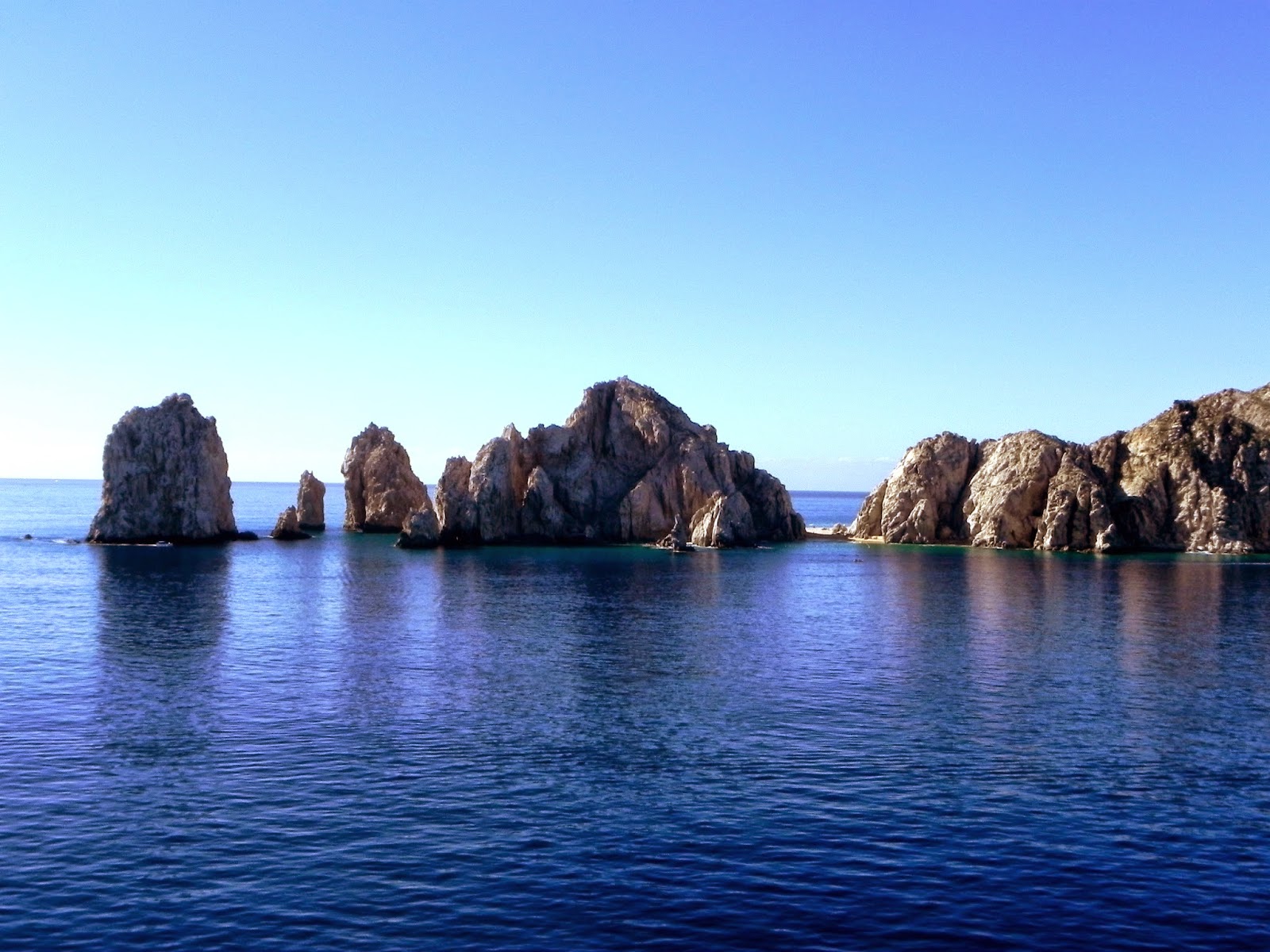
Cabo San Lucas, Mexico


Baja was first sighted by Hernan Cortes’ pilot, Francisco de Ulloa, in 1537 – eighteen years after the conquest of the Aztec Empire. With no gold or silver and little agricultural potential, Baja’s discovery was of little worth until trade routes were established across the Pacific in the late 16th century.
The 1940’s and 50’s brought wealthy vacationers and sportsmen, drawn by the secluded luxury lodges lining the cliffs, and the massive game fish that teem in the swirl of surf where ocean meets sea. Sport fishing still remains one of the area’s chief draws, as popular as the perfect sandy beaches and the ever-growing waterfront resorts. With miles of pristine beaches, beautiful scenery, and gorgeous weather, it’s no wonder that Cabo is becoming a resort destination. 

Wednesday, November 19, 2014

San Diego, California


In the most distant southwest corner of the United States buzzes one of the most dynamic and vibrant seaport cities in the country. In addition to being home to a world-class zoo and aquarium, San Diego is a laid-back navy town that is the closest U.S. city to Mexico.
Great Mexican/American cuisine, Spanish-inspired architecture and what some consider the best weather in North America, make San Diego a destination unto itself. San Diego has always been a good place to live or visit, but in recent years, San Diego has become a model for city restoration and revitalization.